
Roswell

Roswell, New Mexico, 1980
South of the town of Roswell is the old Air Force base. It was a huge military complex, bigger that the town itself, and though the base was closed, the place still served Roswell with an excellent International class airport. In addition to this, many of the buildings were re purposed; the Eastern New Mexico University had a sizable branch here, as well as a Job Corps Center. I was part of this Job Corps Center, and in fact was in the first group of young people to arrive when it opened in 1979. Every few days a bus load of kids would come, until finally we had 500 altogether, but that took some time. For a while it seemed as though we had the whole abandoned military base to ourselves, and abandoned was the word for what we found.
Technically we were trespassing, but there was no one to stop us; we would sneak out during our free time and weekends and explore the various buildings. There were dozens of barracks and while the rooms were stripped of furniture there were an array of things left in lockers, such as photographs, books and magazines. But we did not need to look for dates to know when last this base had been used; in many places we found poems and songs quoted on the insides of the lockers doors, all concerning the fact that these men did not want to go to Vietnam. It seemed that this was one of the last places they found themselves before heading overseas.
The other buildings also had objects left behind; clipboards and file folders and the like in office buildings, springs and coils in maintenance buildings, and even an oxygen tank in a medical building. And then there were the hangers. One hanger had helicopter parts in it, including the giant rotary blades. Some had old parts of vehicles. And one hanger we found had a room built inside of it. It was this hanger that my small group of friends decided to call our hang out.
What made this hanger special to us what the strange room that was built inside. Made of cinder block bricks, this structure had no windows and a very serious door. This door was made of metal, and was between three and four inches thick, and though it must have weighed an incredible amount it moved easily on its huge metal hinges. And yet the door was not perfect; something had happened to it, because it was bent so that it could no longer close properly. This imperfection was critical for us…no one would ever want to be in such a room as this with such a door as that. But a cinder block building with a thick metal door inside of a airplane hanger was not the strangest thing about our new hanging out spot, because inside of this room was a picnic table covered in light green shag carpet.
This was exactly like the wooden A-frame picnic tables that are found in parks, about six feet long with benches that are bolted to the frame. The carpet was carefully nailed to the table and benches. The table only barely fit into the room; there was only about an inche or two on any side and we had to climb onto the table in order to reach the benches. It was obvious, even to our young minds, that the building had to have been built around this table though none of us could think of any possible reason why anyone, and especially the US military, would build this structure. But we did not let this mystery stop us from using it for our own purposes, for this place was perfect for us to play Dungeons and Dragons and be nerds. We would meet regularly after classes with candles for light, sometimes three, sometimes four of us. Then one day one of our group came bearing a package from home.
I am certain that us Corps members enjoyed getting boxes from home just as much as any soldier did at this base in the past. As our friends shared the home-made cookies with us she read the letter from her father as she pulled the various presents from the package. Then she came to a book, and her father told her that he thought she might enjoy this book that had just been published because it had happened in Roswell, New Mexico. It was called “The Roswell Incident” by Charles Berlitz. Being the nerds that we were, we decided to take turns reading it to each other. None of us knew anything about Roswell, and we certainly did not know about what happened here in 1947. We read with both excitement and trepidation…this was a book of people…not just one but many, claiming to have seen aliens and one was thought to have been brought to the very Air Force base where we lived and went to school. Reading about the alien and how it suffered, we paused often, looking around the cinder block room and the ridiculously large metal door. Had this crazy, little room been built to keep captive the alien from 1947? But what about the weird shag carpet? And why was it in a hanger? Even the possibility that this might have been a holding cell for that poor alien, if he existed, was crazy, but not much crazier than the carpet-covered picnic table in the cinder block building inside of the hanger in Roswell, New Mexico.
FATHER RUBY

I’m reblogging my earlier stories.

bridgetcarriedavis's avatarI Don't Expect You To Believe Me

FATHER RUBY
Honolulu, Hawaii
1985


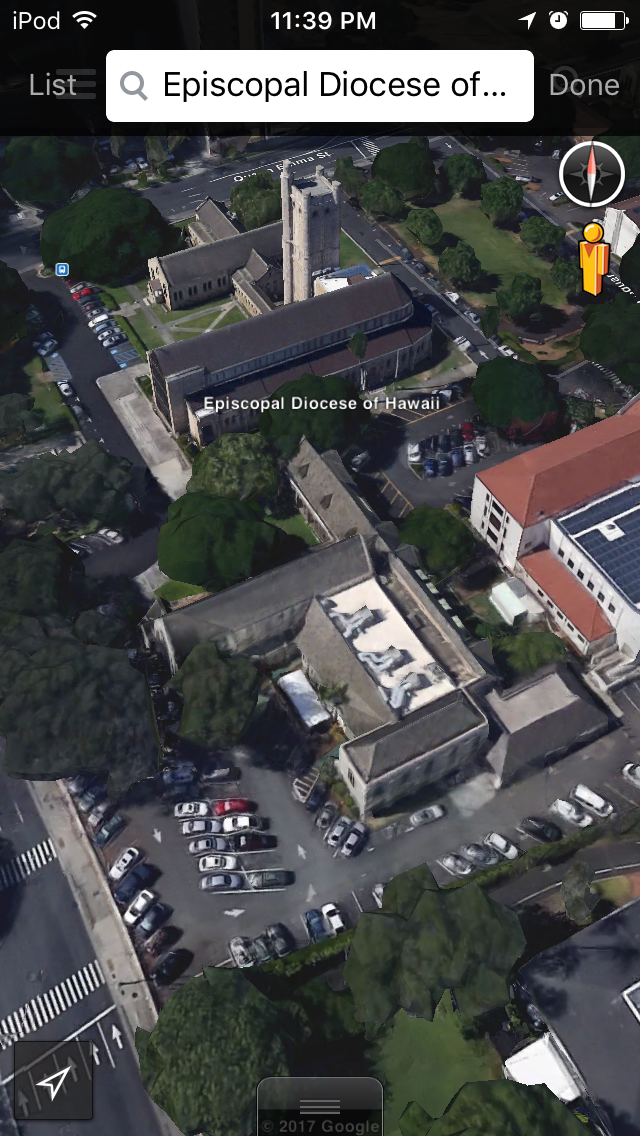
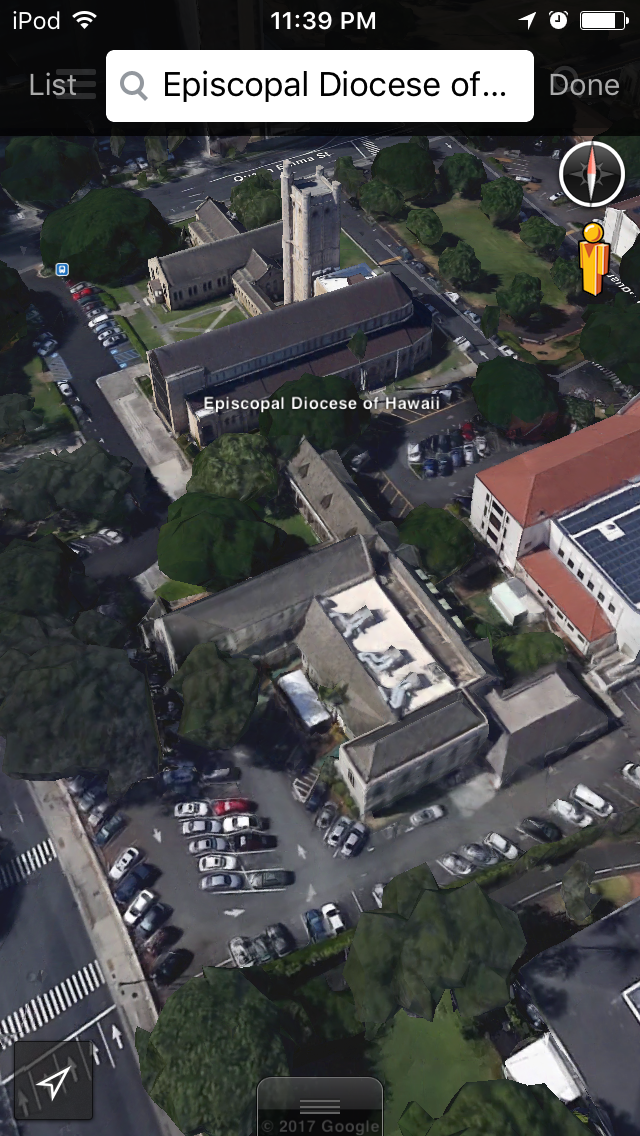
In my seven years living homeless on the island of Oahu, this was the only church that I knew of that offered coffee and donuts before its service. The Episcopal diocese church. Another anomaly was that the service was held early, 8am each Sunday, which is much earlier than most churches. It was held at a magnificent stone cathedral with ceilings so high and walls so thick that it reminded me of a castle, only in miniature. The beautiful cathedral was surrounded by lovely statues flanking great metal doors that opened wide to greet the parishioners. But that was not where the service with the coffee and donuts was held; that was not where Father Ruby preached. He gave his sermon in a small wing of the complex, off to the far right. It was no less beautiful than the rest of the cathedral, and…

View original post 471 more words

The KFC

I’m reblogging some of my earlier pieces.

bridgetcarriedavis's avatarI Don't Expect You To Believe Me

2002
I simply cannot recall what road we were on, except that we were trying to get from California to Arizona – I think. There are some experiences that are so affecting, so harsh, that time and space fade away. This was one of those experiences, though you might be surprised at how slight it may seem at first. I hurts my soul to this day.
Two friends, a lovely couple, my dog and me. Hitchhiking is all the horrible things that you think it is, but it is also a ride when you are in need. So we were nothing but grateful when a man in a pickup truck offered a lift for a good hundred miles. Since I had my dog, GG with me I sat in the bed of the truck with her. It was cold, very cold, and if you have ever ridden in a pickup…

View original post 291 more words

Roswell

One of my first blog postings, when I stayed on the famous Roswell, New Mexico airbase while in Job Corps.

bridgetcarriedavis's avatarI Don't Expect You To Believe Me

Roswell, New Mexico, 1980
South of the town of Roswell is the old Air Force base. It was a huge military complex, bigger that the town itself, and though the base was closed, the place still served Roswell with an excellent International class airport. In addition to this, many of the buildings were re purposed; the Eastern New Mexico University had a sizable branch here, as well as a Job Corps Center. I was part of this Job Corps Center, and in fact was in the first group of young people to arrive when it opened in 1979. Every few days a bus load of kids would come, until finally we had 500 altogether, but that took some time. For a while it seemed as though we had the whole abandoned military base to ourselves, and abandoned was the word for what we found.
Technically we were trespassing, but there…

View original post 778 more words

THE GREETING CARDS

1987-2005
I left my mother’s house when I was sixteen years old and it is because of that fact that I do not think it is fair to judge her though the memories of a sixteen year old. She was at least as mentally challenged as I am, and that is all that I really need to know. Perhaps we will talk it out in Heaven, for I am certain that is where she is at this moment, but even if we don’t meet in the future, and never talk about our history, I’m ok with it; life can be very hard.
I was a horrible daughter, acting out all of my frustration and confusion in loud ways. Being rotten bothered me for a very long while. But I am not going to judge my challenged child-self anymore than I am going to judge my challenged mother. It took a good ten years for me to come to these decisions…That it wasn’t our faults, That we did not deserve to be judged, especially by each other, and That we might not ever be able to express our love and appreciation. I had a hundred reasons for never returning to my home town – all in my head, and it soon became a pain all its own…every time my mother had a birthday, or a holiday passed without contact I felt more lost. And then it hit me…like a whisper from heaven. I could not talk to my mother, but maybe I could whisper, through a card. I was homeless and destitute when this plan hit me and so how could I possibly send my mother a birthday card?
I must admit, I cannot remember the first time I “wrangled” a card for my mother, but soon it was a regular habit, all over the country, coast to coast, and everyone who knew me more than six months knew about this thing. Regardless of where or with whom I might happen to be, when it got close to a holiday, or my mom’s birthday, I would start asking. I just needed a card, even a post card would do, a stamp, and a pen to write with. I would ask people close to me, or perfect strangers sitting on a park bench and if I could not find anyone I would go to the nearest church and ask them. Once I even went to a Hallmark Store.
This all might sound terrible and imposing, but I wish that you could have been with me, even one time, to see the look on a person’s face when they heard my request. People are basically wonderful, I can tell you, and everyone was more than happy – honored even – to help in my quest of love.
I would put a return address if I knew I would be hanging around long enough to get a reply, but usually that was not the case. Being homeless is illegal, and I was always moving from place to place, city to city.
Many times, even with a good address, my mother would not respond, but I understood. Sometimes even a year or two would go by, but I knew that I didn’t want to stop sending those cards. Then five years went by. I sent a letter to the house, asking if perhaps my mom had moved, or maybe even died, but again, no response. Soon I changed to sending birthday cards and Mother’s Day cards. Then, after a few more years I sent only Mother’s Day cards, but I sent them every year, and I promised myself that I would do so until I died or someone asked me to stop. No one ever asked me to stop.
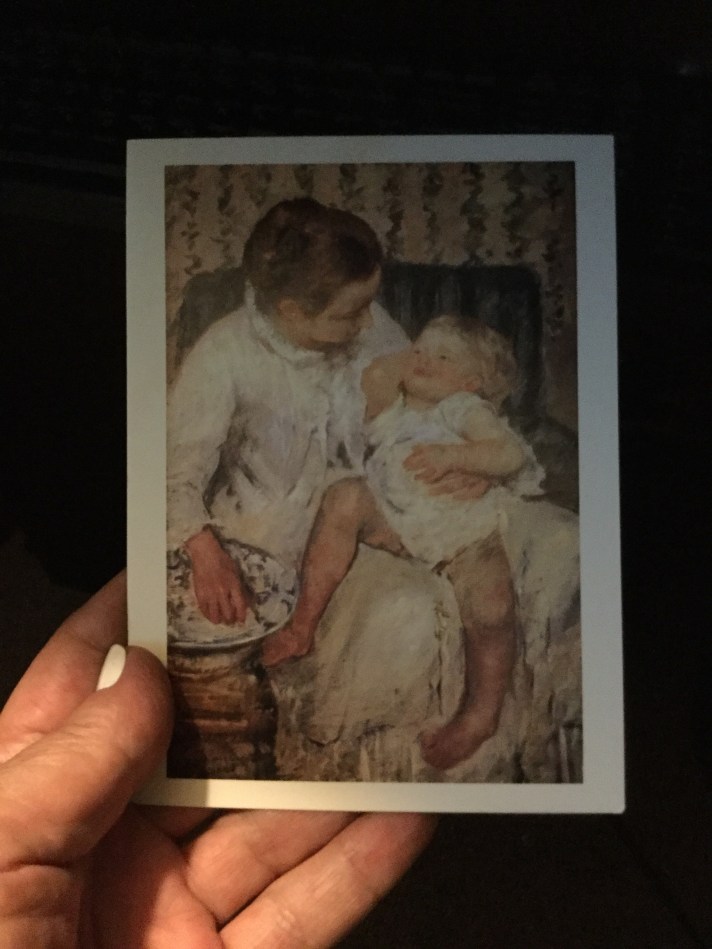
Then, I sent a mother’s day card…I can see it now, a painting in the Quaker style of a mother holding a child, plainly dressed but both joyous in their love. I imagine I always will always remember that card since it was the last. It was then that I heard from a family member who wrote back, shocked that I would finally, after all this time, write to my mom the very year that she happen to die. This person did not know about the years, the decades, of Christmas, Birthday and Mother’s Day cards. She had not told anyone. Year after year…all of the adventures I had gone on to fulfill my pledge, and the people I had begged to acquire these cards…I never even begged for money when I was hungry or cold. She never shared a word. No one in all of my family ever knew that I had been in contact all that time.
I don’t judge my mom, and I don’t want you to judge her either, anymore than I want to be judged by you. Our challenges are not the same. But I am glad at those cards; even though I did not get the warm return from them that I might have wished, I received a warmth and generosity beyond measure from all of those people out there who helped me, so lovingly, to get those cards, and to send them to my childhood address. And I choose to believe that while my mother did not share my cards with others, she felt my love from them, and feels it right now in Heaven.

I couldn’t find an image of the last card but it is similar to the one above, by Mary Cassatt.

The Bag Lady

THE BAG LADY
Wichita, Kansas
Winter 1978
This was my first time in Wichita; it was, and still is, a beautiful city to me, with areas of cobbled streets, a lovely, clean river, and gorgeous churches. The city had more snow than I was used to when I arrived, but I was delighted, since I was traveling with friends and we had a place to stay. Until they discovered that I was sixteen years old.
The phrase is ‘harboring a runaway’. It did not matter that I was a throw-away, and not a runaway; anyone caught giving me shelter could actually be arrested and get significant jail time. So it is hard to say that I was mad at them when they kicked me out. But they kicked me out in the middle of winter.
Outside I almost froze to death a few times, and I did once end up in an emergency room for frostbite on my hands, which still bothers me when the temps get below freezing. I did as I usually do when I’m homeless and afraid, I searched out churches to sleep near. The Pastors and Priests rarely called the police if they discovered me, and often they would let me stay the night. But Wichita had an incredible homeless population then. Soup kitchens often ran out of food before the line was gone, and I was too scared to stand around for any length of time while the men looked me over. I was losing weight at an alarming rate.
Then, late one night as I was walking to keep warm, exhausted from lack of sleep and food, not familiar with this town, I stumbled behind a large Catholic hospital. It was then that I noticed the hospital’s chapel. It was located inside a side entrance, with a little foyer just before the open chapel area with about a dozen pews. In the foyer was a sweet life-sized statue of the Mother Mary, surrounded by fake plants. These plants were huge, and the entire area was full of them, covering Mary’s legs up to the knees. I stepped in the building and was met with what I wanted more than anything one thing at that moment; warmth. It felt so good, that I knew, Knew, immediately what I had to do. I climbed behind the statue and nestling under those magnificent fake plants, I wrapped my body around Mary’s feet, and I slept.
Even at sixteen I had already learned the hard way how to keep myself secret. As soon as I heard a noise, any noise, I got myself out of there, and made sure to stay out of the area until it was well past midnight. I had found a place…a wonderful place.
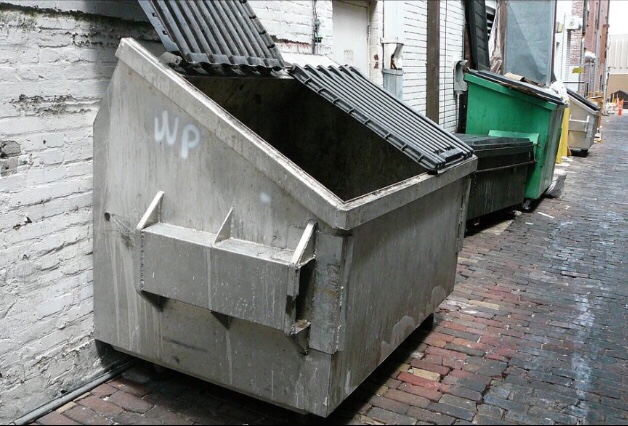
But I was still starving. I had to avoid all forms of authority. I knew that I was would be arrested immediately, and never released until I turned 18 and I could not let that happen. But the faster I lost weight, the more I couldn’t think straight, or walk the miles to the various soup kitchens for hope of a meal. So, finally, at one point I was doing nothing but hiding outside of my hospital in the cold dark by the big trash dumpsters, waiting for it to get dark enough to go to the Mary statue. That was when I met the Bag Lady.
I call her that, but she had a shopping cart. We just don’t have a name for a homeless woman who pushes her belongs around in a shopping cart, so I refer to her as a bag lady. Back in those days all shopping carts were metal, and especially loud outside over dirt and asphalt, but she didn’t seem to notice; she rolled up to a dumpster like it was perfectly normal and without hesitating she bent right into the large, filth covered metal trash can. Within moments she straighten again, now holding a crushed fast-food bag. This she fiddled with until she tore it opened to reveal various pieces of trash…the wrappers and discarded ketchup packages. She tossed the bunch back into the dumpster and reached in again. This time she had one of those triangle sandwich containers, ripped wide open, but with one half of one sandwich still remaining. Without pausing the woman stuffed the sandwich in her mouth – the entire thing. Munching loudly, she turned and reached in again, taking a moment as she moved things around. Swallowing, she came out this time with another fast food bag, but clearly this one had weight. She looked right at me and nodded, her face serious. Her face was always serious.
This package held half a carton of french fries and about one-quarter of a cheese burger, and I expected the Bag Lady to inhale them as she had the sandwich, but to my surprise she sat on the curb next to me and handed me the hamburger. Astounded by all I had seen, I automatically took the offering and stared as she ate the french fries.
She looked at me, then the burger frozen in my hand, and she exclaimed loudly, “Hell, are you scared?!” and ripping the food from my hand she carefully removed the chewed edge of the burger, then replaced it to my palm. “There!” she told me, “No germs!”
Only a person who has been truly starving knows how good food really tastes, I am convinced of that. That cheeseburger was the world to me. I immediately felt my strength returning, and I didn’t feel the cold winter so badly. I think the woman knew how bad off I was; she ate her fries as quickly as I ate that partial burger, and we rushed back to the dumpster, both of us, looking for more treasures. I ate more that night than I had eaten in weeks.
Still munching the woman told me “Now you know, you can come here anytime to get food. Don’t go downtown to the soup kitchens anymore. They are too dangerous.”
I asked, “Do you get your food here?”
She frowned and exclaimed “Hell no! I’m not telling anyone where I get my food, and don’t you go telling anyone where you get yours!”
I felt as wonderful as any person on earth in those moments. I had a warm place to sleep and food when I needed it. I wouldn’t die this winter after all. Then I watched as the Bag Lady went over to one of the hospital’s doors, with lots of ashtrays, and to my continuing surprise, she took a half smoked cigarette and lit it, clearing enjoying it just as much as if it were brand new. She went to hand it to me, filter first, covered in the red lipstick of the original owner. I hesitated.
“Oh hell!” she exclaimed again, and with an impatient grunt, she tore the filter from the smoking cigarette, and discarding it, she re-offered it to me saying, “The germs are gone now, ok?”
I had just started to ask, in my clueless sixteen year old way, “Do you get your cigarettes here…” when,
“Hell no! I’m not going to tell you where I get my cigarettes, and don’t you go telling anyone where you get yours!”
I nodded, and she said, more tenderly than at any moment since I had met her, yet still with no hint of smile or friendship, “Time for bed.” and with her shopping cart she rattled into the night. I never saw her again, and I looked. I wanted to thank her, I have always wanted to thank her.
She saved my life. I hope to meet her in Heaven, so that I can thank her; it is a special request of mine.

THE BUTTER KNIFE

Honolulu 1985
It was impossible and it happened within seconds.
There must have been at least one hundred people waiting in line for food; the line stretched through the soup kitchen, and spilled to the sidewalk outside. My friend and I were closer to the back of the long building, so we knew we had a long wait in front of us, but it was worth the trouble for the plate of food we would eventually receive from this place, the only soup kitchen in Honolulu at the time, and more than likely our only meal of the day.
Everyone has waited in lines and the experience is pretty much the same all over, shuffling about, low talking, people moving to and fro with their food. So it was not noticeable when a local man came up to the line, right about to the middle, to speak with another local man who was waiting. But then the newly arrived man cut. He stepped right in front of his friend, and then turned around and grinned, daring anyone to defy him. He was a big man, known for drug abuse and violence, and no one had any intention of defying him. Until someone did.
It was so fast, yet, if I had painting skills I could paint every molecule of this instant as it came into being. A young white man, thin and dirty, and as quick as a lightning bolt, jumped out of the line and pulled a butter knife from his pants pocket. For a brief moment he held it at eye-level…any of us who happened to be looking in that direction, as I was, could easily see that it was a butter knife. Smooth and brightly reflecting the light, we could tell that there weren’t even any serrations on the blade. I know that many of us who saw this had just enough time to think how futile such a dull knife would be against this local Hawaiian man, twice the size of this skinny attacker, before the white man lunged forward. The simple utensil disappeared into the man’s chest, handle and all and the amount of dark red blood that suddenly exploded from the wounded man immediately told us that his heart had been hit. The red stream was so forceful as it covered the attacker and many nearby, that it seemed to be spent by the time the victim hit the hard floor. Many closer to the scene mentioned later how disturbed they were by the fact that the victim had not had time to close his eyes before he died.
I wish I could say that this was the most startling thing that had ever happened to me, and that I was frozen in place with shock, but I knew better. I knew that there was nothing I could do. I also knew that if I stayed I would be forced to go to the police department for questioning with a hundred other people, and that all the white people would be held even longer, for longer questioning, to make sure we didn’t know the murderer. So, like dozens of others, I ran. We ran in all directions, some screaming, all of us crying.
No one knew the young man – he had only just arrived from the Mainland. We never saw him again either, though the effects of his  insane actions were far-reaching. Because the killer was a Haole, a white person, and he had killed a local, there was a time of retribution, when homeless white people became especially unpopular. Locals, homeless and otherwise, would bully us, and worse. The police know about this sort of backlash, and we (white homeless people) were advised not to be seen at the soup kitchen for a while. Instead, we were fed from a van under a bridge on the outskirts of town, for about two months, a policeman always standing nearby for our protection from angry locals.
The van would come every day at 5 pm, and we were grateful, even if we did have to walk a few more miles to get it. And when we did meet under that bridge we would always talk about that day, that terrible moment. We all agreed, every single one of us, when memories of that horrible incident came into our mind we wouldn’t see the killer, or the victim, or even that insane amount of blood…we all saw that damn, impossible butter knife.

The KFC

2002
I simply cannot recall what road we were on, except that we were trying to get from California to Arizona – I think. There are some experiences that are so affecting, so harsh, that time and space fade away. This was one of those experiences, though you might be surprised at how slight it may seem at first. I hurts my soul to this day.
Two friends, a lovely couple, my dog and me. Hitchhiking is all the horrible things that you think it is, but it is also a ride when you are in need. So we were nothing but grateful when a man in a pickup truck offered a lift for a good hundred miles. Since I had my dog, GG with me I sat in the bed of the truck with her. It was cold, very cold, and if you have ever ridden in a pickup truck at 70 miles an hour in the winter, you know what I mean.
I was relieved when he pulled into a Kentucky Fried Chicken place because it meant a break from the freezing wind. I was surprised at this generosity when he asked us to join him in the restaurant. We were living outside, and I’m sure that our clothing and smell reflected that, yet here he was, doing this wonderful thing. I explained that I didn’t feel right leaving my dog, she was still pretty young and we had not been separated. So they went in, and sat down and I sat in the pickup with my dog, dreaming of the wonderful meal that I felt sure they would bring me. You can imagine…we had not had hot food in months, let alone something as tasty as this.
I’m sure my tummy grumbled in delight when they finally approached the truck and the man was holding a small box, walking toward me. Just before he got close enough to hand it to me he stopped, looking at me straight in the eye. Then he fed the food to my dog, and when he handed me the box the only thing left was the biscuit.
What would you have done? We needed this ride. I ate the biscuit and cried for the rest of my life about it. I’m crying now.

Why? What was he trying to say? What was his point? I can tell you my theories: homeless people shouldn’t have dogs or women shouldn’t travel alone or…What does it matter. I had heard it all before. I got his message: in his eyes I was something less than my dog. I didn’t deserve. I needed to be punished.

THE CREVICE

PRESCOTT, ARIZONA
2002


My road-dog, GG Shepard was about six months old; she was a German Shepard mix with a sweet disposition and who was loyal to a fault. We were alone, camping outside of Prescott in a gorgeous rocky area known as the Dells. These granite rock are amazing…I still don’t understand how they were formed; boulders of all sizes, some as large as a house, scattered with evergreens and streams and all above a mile high in elevation. It was not an easy place to traverse, with all the climbing involved, but it was an excellent place to camp unnoticed.
As with any illegal campsite the secret to safety is distance; it is vital to get far enough away from civilization that you are not followed by human monsters or reported by homeowners to the police. Our campsite was perhaps a mile and a half from town. That might not sound like a lot, but when you are climbing hundreds of rocks and boulders to get there, it is plenty far enough. Another vital aspect is to get to camp while there is sufficient light to see by, and one day our luck ran out. GG and I were visiting with friends when I realized that the sun was setting. We set out immediately, but I knew that if we were to make it safely we would need to take a short cut, one that involved a much more rigorous climb. GG was okay with climbing, in fact she often scared me with her prowess, so we made our way as quickly as we could. Then we came to the crevasse.
Now, technically this was no large crevice. It was a space between the boulders perhaps three feet across which, even with my full fifty-pound back pack on, I could easily leap across. However, in between the stone megaliths was a gap with a drop of about forty feet straight down onto another collection of rocks. The jump was tricky – we were in a narrow space between two large boulders with just enough space for me and my backpack to squeeze through, and jumping to another set of boulders with a narrow ledge. But I was careful and successfully made the jump. I continued on, thinking only of the sun setting; we did not want to get caught sleeping outside without our gear. We would be ok, I was sure, but we would not be comfortable. Still, we had made excellent time so far, and there was a good chance we would make it back after all. Then I heard the faintest, smallest little whine and my heart dropped.
Sure enough, I turned around, and there she was, my six month old puppy, on the other side of the crevasse. She was crying and shaking, and she had buried her nose into her paws as though she understood exactly what I understood. We were in an emergency situation and GG was too afraid to jump. Normally I would have simply jumped back, picked her up and continued on our way (I had carried her across the Oklahoma City Interchange just a month before!), but this was different. I could not turn around on the ledge I was on which meant that I would have to jump back between those boulders with the heavy packback…one slip of any kind and the pack would pull me into the crevasse.
Watching the sun get closer and closer to the horizon I begged GG to jump, then I yelled, then I cried. She tried…she would wiggle, and turn and yelp and whine, but she just couldn’t. I think perhaps it was the sheer darkness creeping in all around; we were simply never out at nighttime and she wasn’t used to it. So, resigned, I prepared to remove my pack. It contained a fresh supply of food and water, so I sorely did not want to lose it, but there was no choice; there was nowhere to set it down except at the bottom of the dark crevasse.
I am not ashamed to say that this was one of the most terrifying moments in my life.
These backpacks are meant to carry a couple hundred pounds, and so it had a belt that goes around your waist…this belt is crucial because it keeps the weight from crushing your shoulders. I knew the moment that I released the waist belt the fifty-pound pack would pull my shoulders back, in this case back over the crevasse. I would have to ditch the pack as fast as possible, and I prayed that it would not catch on my coat, or hair, or…my mind raced with all of the things that could go wrong. Leaving GG was out of the question; little puppies and even grown dogs do not often make it alone in the wild.
Closing my eyes (I didn’t want to see the fall) I took a deep breath and fumbled for the belt buckle that would release the backpack; then I heard the thump and there she was. GG had made the leap! To this day I believe that she knew…she understood how much it meant for her to make that jump.
Night did fall, but we made it back to camp, though it took GG’s nose and wonderful sense of smell to get us through the darkness for the last few yards. I praised her loudly the entire time.

My sweet girl lived ten years for me. ❤️🐾

FATHER RUBY

FATHER RUBY
Honolulu, Hawaii
1985


In my seven years living homeless on the island of Oahu, this was the only church that I knew of that offered coffee and donuts before its service. The Episcopal diocese church. Another anomaly was that the service was held early, 8am each Sunday, which is much earlier than most churches. It was held at a magnificent stone cathedral with ceilings so high and walls so thick that it reminded me of a castle, only in miniature. The beautiful cathedral was surrounded by lovely statues flanking great metal doors that opened wide to greet the parishioners. But that was not where the service with the coffee and donuts was held; that was not where Father Ruby preached. He gave his sermon in a small wing of the complex, off to the far right. It was no less beautiful than the rest of the cathedral, and it was surrounded by trees, and one statue, of Mary. Also, this service was Episcopalian.
Raised protestant, I still don’t know the difference between Catholic and Episcopalian. But I didn’t go to that church to learn, and neither did the majority of the people who showed up at this place, so early in the morning. If you were to drive by at 7:45 you would see a line of people, clearly homeless by their dirty appearance (staying clean while living outside is impossible). You might even notice that it is almost always the same people, because it is not everyday that someone gives you donuts and coffee for free, and you don’t forget a thing like that. Now, I will admit, most of the people who came for this wonderfulness did not stay for the service, though they were always lovingly invited to do so. But I did. I stayed for Father Ruby.
I am not sure where he was from; his accent was very thick, maybe Spain, maybe Portugal. He was small, and soft-spoken and he smiled all the time. He was the one who provided the coffee and donuts and had secured this unused wing of the church for us. It was him who agreed to hold the service two hours before the main church, not just so that the congregation would not have to see homeless people, but also so that we could have some dignity within our own group.The homeless know that they are being judged when people look at them. Father Ruby knew who he was working with.
Here is an example of a sermon he often gave:

“Jesus had no home. Once he left his family he never had a home again. He knew what it was like to have the ground for his bed, and he knew what it was like to own no food. I have always had a bed to sleep in, every day of my life, and I have always owned food that I could eat at any time I wish. I am here to tell you now, you are more like Jesus than I am.” And another of his sermons, aimed at the addicts:
“When you go into the world today and you want to drink the beer, buy only the one beer, not the whole six-pack. And when you want to smoke the pakalolo (marijuana), buy the one joint, not the whole bag. And when you sleep, be sure you are safe first.” I won’t lie, those donuts were often the high light of my week, but honestly, sitting for an hour in that gorgeous building that was created for the love of God, and hearing Father Ruby talk to us…to us…was amazing.
Father Ruby knew us well, and while I never converted, I loved him for knowing us.

THE RIOT


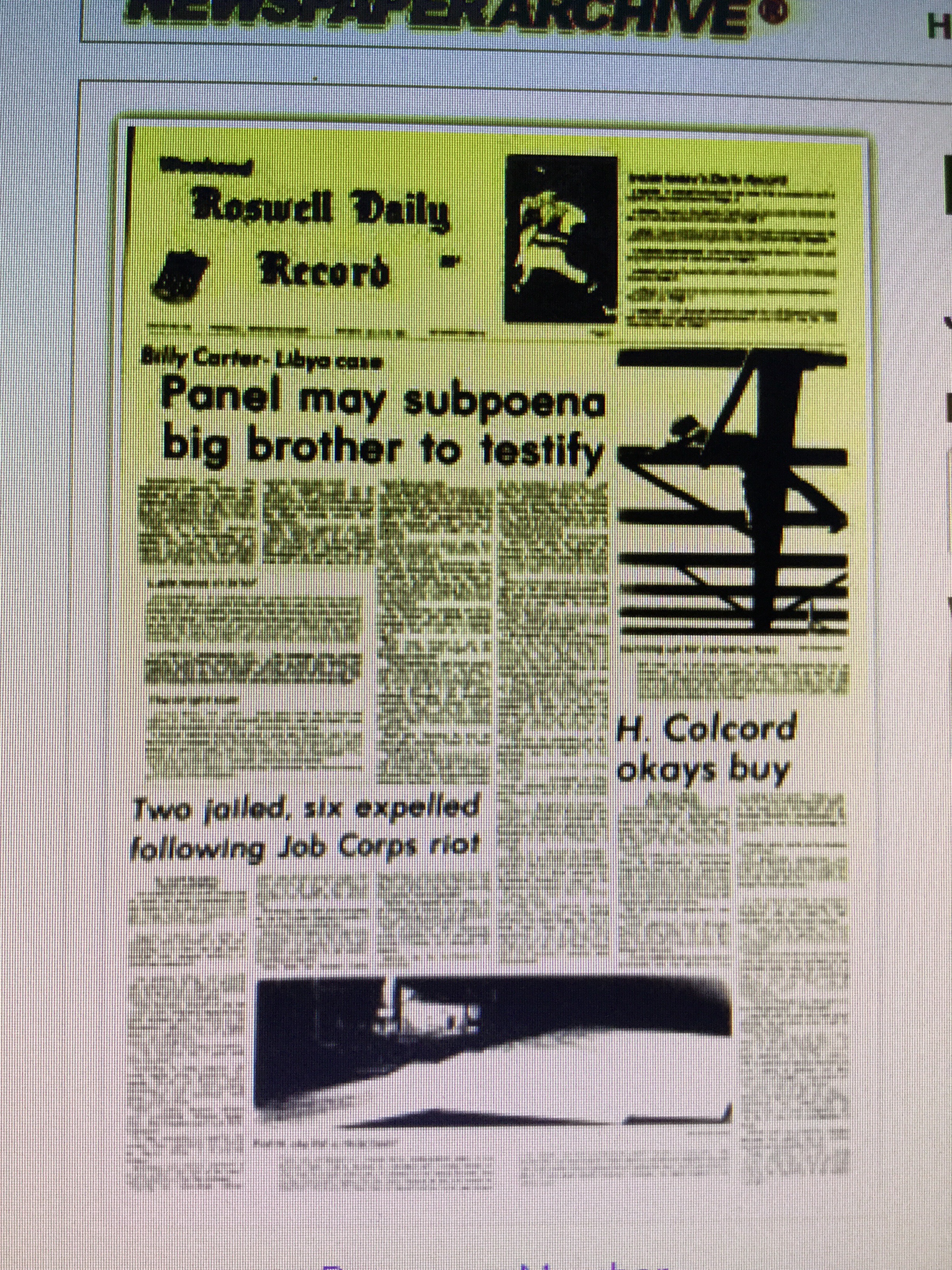
I think the above is the article?

The Riot
Roswell, New Mexico
1981

Job Corps is a government controlled residential trade school for people between the ages of 17-21. It was begun by President John Kennedy and put into law in 1964. Designed for disadvantaged youth, it provides a stable place to learn a trade while going to school and getting a diploma. Roswell Job Corps held 500 people when I was there and the campuses, or “centers” can get even bigger.
The reasons a youth might end up at Job Corps are numerous, some involving drug addiction, or mental illness, while many were placed by a court Judge in lieu of jail time. These latter corps member were under a level of stress the others of us never knew, because if they messed up at the Center, they knew they would have to complete their prison sentence. As for the rest of us, we would simply be expelled and left to our own devices.
My friend, Dana, was one of those who had been ordered by the courts to complete his courses in Job Corps or he would be forced to complete his sentence in prison. He had been addicted to heroin, but had kicked it. He was kind and thoughtful and one of my best friends. We had both been accepted to some college classes, which meant that we were allowed to live in the college dorms. This was a huge; instead of four beds per room there were only two, and there was no “lights out” rule. We could leave the lights on all night if we wanted to. Sure, we still had curfew, and couldn’t leave the Center without permission, but that didn’t damper our enthusiasm. And enthusiasm is what Dana and I had. We both enjoyed learning and getting our GEDs and looked forward to the future. I even spent a holiday with his family. Then a young woman showed up, a new member of the Center. I cannot remember her name at all…weird. I think it started with an M so I will call her M.
College dorms were segregated; men and women could not go to each other’s dorms, so I was surprised to hear that Dana was seeing this young women in his room. She lived the Center’s dorms and both could be expelled for this violation. They had known each other back in Las Cruces, before coming to Job Corps, and were restarting their past relationship. I didn’t like Dana breaking the rules like that, but I chalked it up to love and gave him some space.
It didn’t take long to realize that Dana was doing drugs again. A person can hide alcohol use, cocaine even, but no one can hide heroine use. The change in personality, look and even the walk changes almost right away. His girlfriend was always nearby, so when I learned that he had dropped a college course, and was in danger of losing his dorm status, I confronted her outside, between two buildings. A few people witness this. We immediately began by throwing insults but then she took off her belt, a chain-drive belt made from the chain of a motorcycle, which was popular then. I was a very physical person back in those days and I wanted to pounce on her like a mama bear protecting a cub, and I stepped forward, ready to tackle her. Yes, I knew I would be hit by that belt, but then I would grab it and I would have a chain to hit her with. This was not my first rodeo, as they say. But to my surprise, someone from behind but a belt in my hand. It was the leather variety, but it was enough to stop her from charging at me. But just then (thank you, God) we heard that adults were on the way, and we scattered. Job Corps had a no tolerance policy on violence…it didn’t matter who started it, anyone involved in throwing blows would be immediately expelled. I didn’t know what to do so I walked away. Later, I got notes to Dana, and he wrote notes back, insisting that all was good and not to worry, so I backed off. Then I heard that Dana was being expelled. When people are expelled from Job Corps they usually leave that day. I never saw Dana again.
When I heard the news I cried with anger; I actually think my tears were hot. Dana was so sweet, so intelligent…so not meant for prison! He had been my best friend, and I couldn’t help, wrongly or rightly, to put all of my anger and frustration on that woman who had brought heroine back into his life.
I had gotten the news on my way to breakfast; it had so upset me that I had stood outside of the cafeteria building, crowded with corps members on their way to eat and I literally screamed that I was going to beat up that woman for doing this to Dana. Too upset to eat, I went back to my dorm room and fumed some more. By the time lunch came I was hungry enough to be forced from my room, but I was still furious, and hoping to see her.
I sat with a few friends and then M came in and to the surprise of everyone in the room, she was flanked by two adults, Residential Advisors. They got their trays and sat across the room, facing me. My friends urged me to remain calm, but then that woman, Dana’s downfall, smirked at me, narrowing her eyes and smiling wickedly. I snapped. I stood up so quickly that I flipped by tray, full of food, onto my friends lap. I might have tried to reach her then, jumping over the tables and all, but the adults gave me a stare that was as good as a brick wall. I stormed out.
There was one path to and from the cafeteria building, and a parking lot behind the building for staff. I sat next to the walking path and insisted that I was going to wait for that girl and then I was going to kick her ass. I just kept muttering loudly, “She’s mine. Don’t touch her. She’s mine. Back off.” over and over again. Dana was expelled, probably headed back to prison and again addicted to heroin, I had lost a good friend, and this bitch was being treated like royalty. I just could not let her get away with this injustice. All of my attention was on the door of that building; I didn’t notice what was going on behind me.
My friends came out and sat with me, try to calm me down, but it was no use. I couldn’t calm down. I alternated between crying for Dana and yelling for the monster who had destroyed him. I wasn’t sure how much time passed…
Suddenly, from behind, a student yelled, “They’re taking her out the back!” I looked at the parking lot and sure enough, surrounded by adults, the woman I wanted was being led into a car. I jumped up to run in that direction, but my attention was diverted by movement from my left. To my amazement I was being tackled by a police officer. As I hit the ground and rolled I could see a mob of people and police running around, hundreds of them! Students were screaming, trying to get away, fleeing into all directions, while cops only had to reach out to grab someone, and throw them to the ground. As I was put in the back of a squad car I got a better look at the scene behind me. This area had trees and the police had snuck up on us, like Ninja, and were in place when the adults took the target of my wrath to the parking lot. There were not only City police, but County and State officers as well.
They cops knew that I was at the center of this disturbance, so they whisked me away and my two friends to the County Jail right away. I insisted, without stop, that my friends were innocent, what a travesty of justice this was…on and on. We were booked, and fingerprinted, and was told by the female guard to stop talking. So I started muttering, but careful to mutter loud enough to be heard. We were taken through one locked door into a hallway which ended in another locked door, and there were the stripe on the floor where you stay on one side, and the guards stay on the other side. Once in this hallway the guard locked the door behind us and then unlocked the one in front of us. My two friends went through, and I was about to when the guard suddenly crossed the line and stood in my way. She moved so quickly that I actually bumped into her, and being taller than me I had to look up to see her at this close angle. She was looking at me with eyes so dark that I stumbled back. She growled one sentence, “Get off your high-horse, now!”
I was in jail longer than I needed to be because Job Corps, our legal representative, does not tolerate cursing, and it took me two days to calm down enough not to curse. Then I found out that I was charged with Inciting a Riot and Public Array. I explained to the judge that I had no intention of inciting a riot, but he didn’t care. At one point he told me that I was “kicked out of Roswell for the rest of your life” and I laughed, which made him mad. He asked why I laughed and I told him that in our country to can’t kick someone out of a town for life and he said, “But I can keep you.” That shut me up.
Of course I was being expelled, and that saddened me, but I learned something that I was not expecting, that made me smile. The Center was in an uproar over my arrest and the way the police were called on us. The students showed their displeasure in the best way they knew…graffitti and most of it was against M. She was in the same jail house, but for her protection. She would be transferred immediately.

This incident made the local papers, but I bet they never new that it wasn’t a riot, or public array, but one angry young woman who was mourning the loss of a good friend to drugs.

THE CANOE


Waikiki, Hawaii
1988

Anyone who has seen the tv show Hawaii 5-0 has seen that great shot of an outrigger canoe plunging through the waves of the Pacific Ocean. What makes this style of canoe so useful in turbulent water is that wonderful arm stretching out from one side. This arm, called an Ama, stabilizes the craft so well that it is hard to tip the canoe over – though certainly not impossible. Still, the outrigger canoe is so relatively safe that there are numerous canoe clubs in Hawaii for all levels of experience, including a canoe club for blind people.
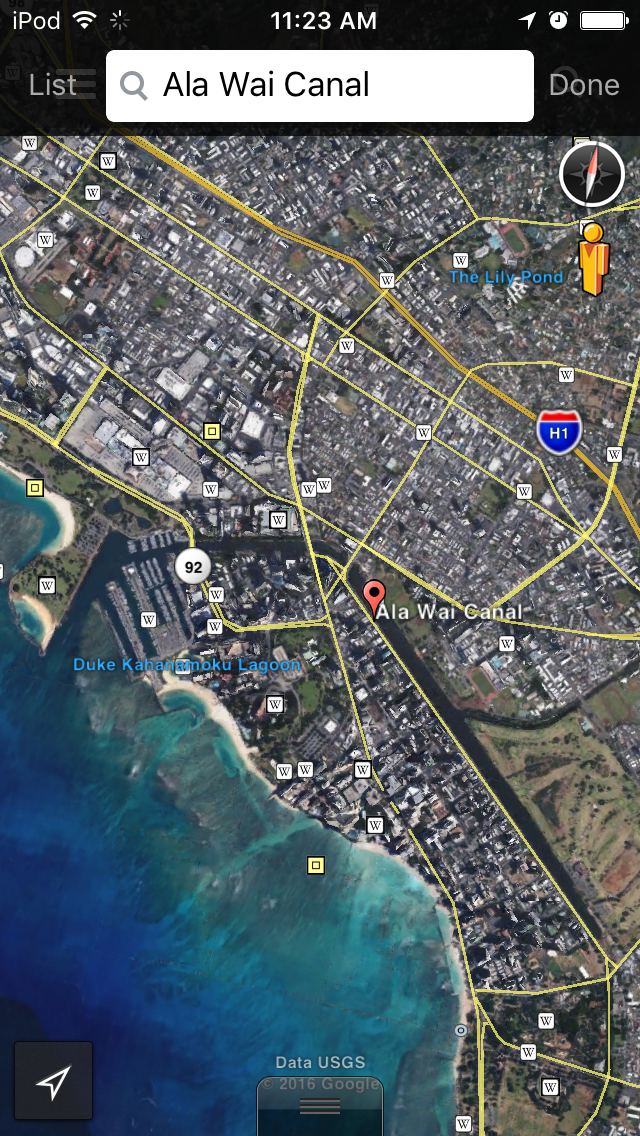
I, like many human beings, didn’t know about dealing with blindness until a friend of mine actually went blind. The way she handled it inspires me to this day. Instead of shrinking, as I might have, she expanded…she wanted to do everything she could find. And then she found the blind canoe club. The Outrigger Canoe Club of Hawaii had graciously allowed a group of blind paddlers to use a canoe once a week. They paddled in the Ala Wai Canal that borders beautiful Waikiki, a lovely canal that led to the ocean. It was usually a peaceful place, but the right combination of wind and tide could make for a rougher ride at times.
Between her schooling for the sight-impaired and her white cane, my friend, Fran, had very little trouble getting to where she wanted to go, but that wasn’t true for this canoe club. They shoved off at a difficult location, with many turns and vegetation, and potholes in the dirt parking lot. So she asked for my help to get her there and back. Of course I was happy to help; Saturdays became a regular thing for us, I would help her get there and back, and she would buy me lunch.
It was then that I met the club; sure enough, everyone was blind expect for the Steersman, a nice man who actually belonged to the main club and volunteered his time for this endeavor. The canoe they used was an eight-seater, and gorgeous. They would spend an hour going up and down this canal, and gaining respectable speeds at times. I learned the people’s names and I often was of use helping people in and out. It was great for everyone.
And then it was announced that the Steersman would soon be leaving for a few weeks, to visit family in Japan, and that a replacement had not be found. Sadly he told them that after one more week the blind canoe club would be cancelled for a month, maybe more. Expecting to hear groans and protest I was surprised instead to hear my name from multiple sources. They were claiming that I could take the Steersman’s place.
I’m glad that most of them could not see my face, because I’m sure it would have revealed my thoughts, “Are you effing crazy?!” Besides the fact that I had only been in Hawaii four years, I was not exactly fond of the ocean sports. I immediately began my protesting and then suddenly the group took on a new atmosphere…an attitude I had not seen before. They didn’t beg, or cajole me, try to bribe me or even cry – they went straight to guilt. How dare I even consider saying no to them when this was the single most awesome event of their week? How could I be so cold to the war vets and retired nurses that were in the club? What could I say? What would you have said?
So, I learned how to be a steersman for a eight-seater outrigger canoe. I’m happy to report that they are indeed as easy to maneuver as I had hoped, and after some practice I was tolerable at the cadence (it is the steersman that calls out when the paddle should switch hands). I was honored to do this for them, and I even enjoyed doing it, except for that one day. Suddenly a man in the front position stood up, screaming that something had bit him, which made almost everyone else stand up. I can’t say that I blame them, they couldn’t see what danger might be lurking at their feet, but the canoe was now moving erratically and I wasn’t sure what would happen first, we would tip over or hit the canal’s wall and then tip over.
I yelled for them to sit and be still, but I could tell they didn’t hear me. I screamed: “Sit down or I will jump out of the canoe!” I don’t think I would have done that, but just the image of trying to round them up from the salt water was making me feel close to panick. But, as scared as they were, the idea of being without a steersman scared them more and, gratefully, all sat. I told them to hold their feet in the air and I quickly crawled under, looking for what had hurt the front man. It was a fish, about five inches long, that had jumped into the canoe. The fin had cut the man’s foot, just at the heel. The wound did not look deep but it was still bleeding. We called it a day and got the canoe back to the landing.
I don’t know what I was expecting back on shore, but it is always foolish to underestimate the handicapped. Without skipping a beat they acted as if nothing happened, changed to their street shoes and we scheduled for next week. The lead man brushed me away when I tried to help him with his shoes and warned me that if I ever yelled at him again he would ignore me completely. I believed him completely.
But then Fran took me out to lunch and bragged to anyone who listened how I had just saved seven blind outrigger canoe paddlers, and that made my day.

I love you for that, Fran.

THE ROOF 

The Roof
Honolulu, Hawaii 1984

At this time was there only one place on the island of Oahu that was expressly for the care of homeless people, the Institute for Human Services. While IHS was written on their door, we homeless knew them as the Peanut Butter Ministry, because often that was all that they had to offer. But I can tell you from experience, they were the best peanut butter sandwiches on this entire Earth.
They had a two-story building in Chinatown, on the edge of Honolulu, where they fed people twice a day, once in the morning and again in the evening. After the last meal they would put the tables and chairs on one side of the main room and allow people to sleep on the floor for the night. While they only had room for elderly and families inside of the building, anyone who wished it could sleep on the top of this building.
About fifty people could fit on this flat roof, and it was first come, first serve, though there were a couple of cardboard structures that clearly showed that some people claimed real estate up here. It was almost dark and my friend and I found a clear space and actually feel asleep pretty fast.
This was Mike, a platonic friend who I traveled with, starting back in Texas. We both had experienced sexual abuse and felt scarred by it and we found comfort, as well as safety, in pretending to married. We had walked miles and slept in mosquito filled jungles for days and so we were grateful for this space. We fell asleep well fed and hopeful for a fresh day in paradise.
Then, it must have been after midnight, we woke to the sounds of arguing. The people who grow up in Hawaii have a very colorful way of talking, and being new to the State, we did not understand right away just how serious the conversation was. We tried to go back to sleep.
Then we woke to yelling; clearly the argument was escalating. Now we could tell that the man who was yelling the loudest was called Kila. We had seen him before, true blood Hawaii and immensely large; he could have been a sumo wrestler. I never did know who he was yelling at, but it was clear that Kila blamed him for something. They were both obviously drunk, repeating words and cussing more than talking. Otherwise, no one else was stirring.
We considered leaving, maybe finding somewhere more quiet, but we were in what was probably the roughest part of Honolulu, in the middle of the night. Worse, we were that terrible combination of United States Caucasian and freshly arrived. We turned over and tried to go back to sleep. To our surprise, the argument seemed to slow down, and then, gratefully, end altogether. We fell asleep.
We were not the only people on the roof that night who jumped up, straight onto their feet, at the same moment. It was about ten seconds after we heard the man beg for his life and then hit the cement sidewalk below as Kila threw him off the ledge.
I never knew what happened to the man; the building was only two stories, but he had hit so hard, and he did not make another sound. I never saw him again, though Kila was around as usual. Moving in the dark, at least a dozen of us said nothing but quietly grabbed our belongings and left the building, some of us banding together on the nearest pier to wait for daylight, none of us able to sleep now. It was during this time that I learned a little more about Kila, and how he was alternately drug addled or in prison. And also that Kila was the Hawaiian pronunciation of the word, Killer.
Never again did I attempt to sleep at this shelter, but instead went back to the jungles and those mosquitoes.